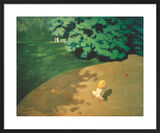
Vallotton, Félix
Félix Edouard Vallotton (1865-1925) was a Swiss painter and printmaker. During the 1890s he belonged to the group of artists known as Les Nabis (the prophets). This circle of young, avant-garde artists embarked on a new path whose highly-decorative style of art was influenced by Gauguin and Japanese prints. He was an important figure in the development of the modern woodcut.
He has chiefly won international renown with his remarkable black-and-white woodcuts, which are unparalleled in style, technique and mood. An underlying tension or threat is always present in these works, although they also incorporate humorous elements that often harbour social criticism.
As a painter Vallotton developed a highly personal style, drawing his inspiration from Japanese print art, the work of the Neoclassical French master Ingres and photography. His style is characterised by a smooth finish, a cool atmosphere and a sophisticated use of colour.
He has chiefly won international renown with his remarkable black-and-white woodcuts, which are unparalleled in style, technique and mood. An underlying tension or threat is always present in these works, although they also incorporate humorous elements that often harbour social criticism.
As a painter Vallotton developed a highly personal style, drawing his inspiration from Japanese print art, the work of the Neoclassical French master Ingres and photography. His style is characterised by a smooth finish, a cool atmosphere and a sophisticated use of colour.
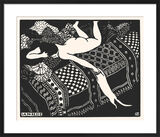
La Paresse, 1896 Framed Art Print by Félix Vallotton
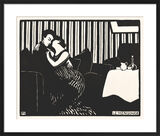
Le Mensonge, 1897 Framed Art Print by Félix Vallotton
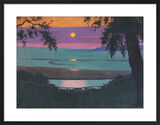
Sunset At Grace, Orange And Violet Sky , 1918 Framed Art Print by Félix Vallotton
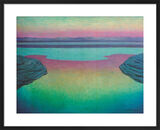
Marée montante le soir (High tide in evening light), 1915 Framed Art Print by Félix Vallotton
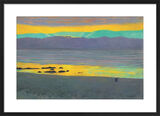
Coucher de Soleil Jaune et Vert, 1911 Framed Art Print by Félix Vallotton
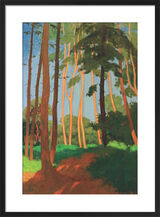
La Clairière, 1911 Framed Art Print by Félix Vallotton
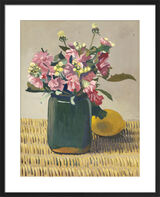
A Bouquet of Flowers and a Lemon, 1924 Framed Art Print by Félix Vallotton
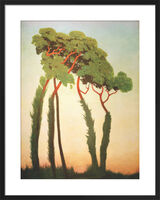
Derniers Rayons, 1911 Framed Art Print by Félix Vallotton
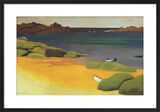
Rade a Tregastel, 1917 Framed Art Print by Félix Vallotton
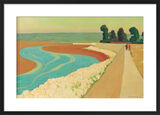
Digue de Honfleur, 1915 Framed Art Print by Félix Vallotton
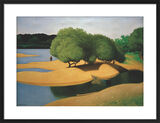
Des Sables au Bord de la Loire, 1923 Framed Art Print by Félix Vallotton
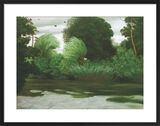
L'Eure a Pacy-sur-Eure Framed Art Print by Félix Vallotton
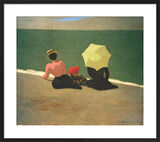
Sur la Plage, 1899 Framed Art Print by Félix Vallotton